J SULTAN ALI
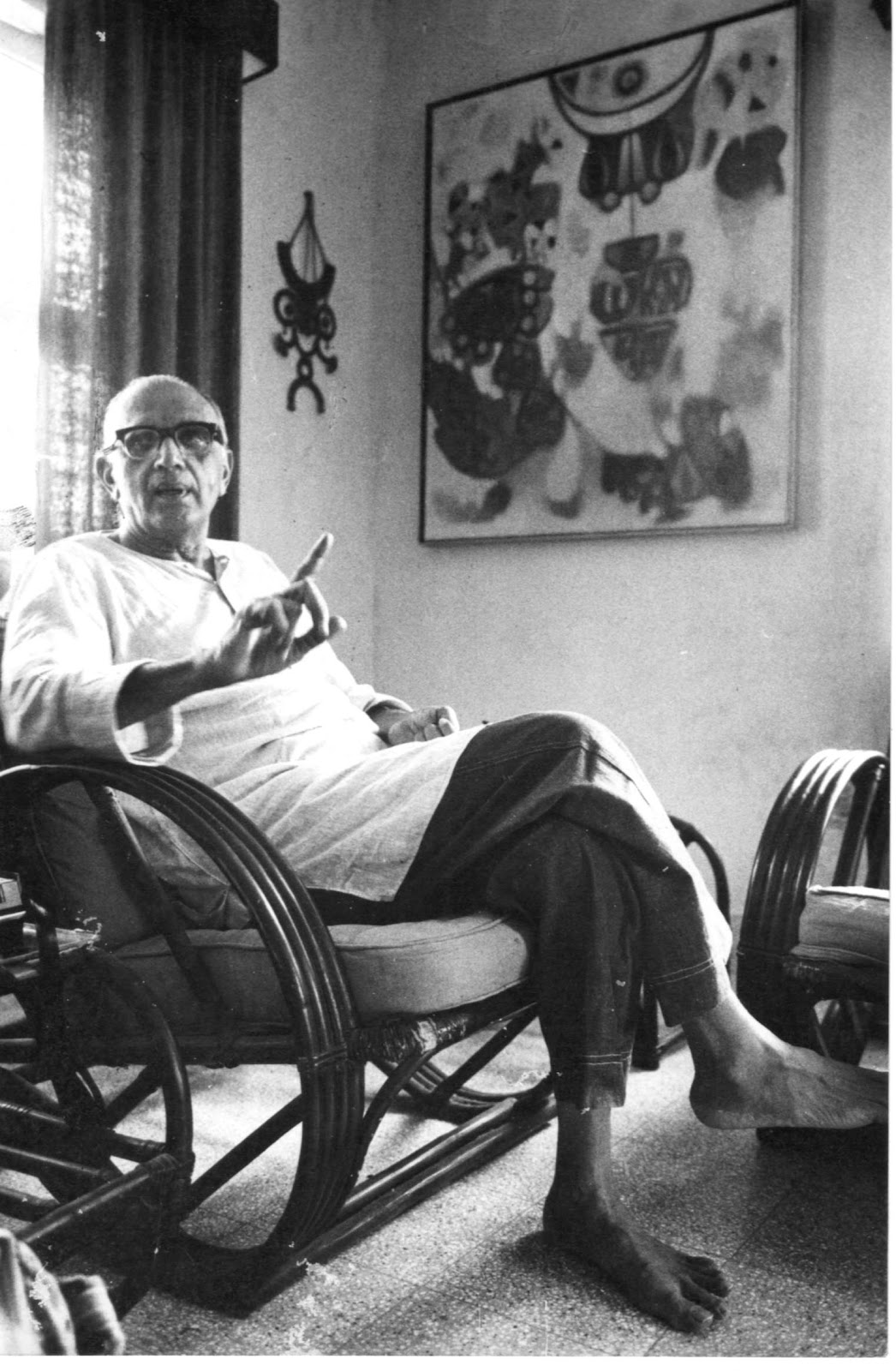
BORN IN A BOMBAY-BASED BUSINESS FAMILY, J. SULTAN ALI’S FIRST ACT OF REBELLION WAS TO LEAVE THE SAFETY OF THE FAMILY TRADE AND JOIN SCULPTOR-TEACHER D. P. ROY CHOWDHURY AT THE GOVERNMENT COLLEGE OF ART IN MADRAS IN 1945.
Ali also studied textile design at the Madras Government Textile Institute, and pursued a photography course in London. He not only learnt the strict discipline of classical art, but also engaged in an intense search for a modern Indian idiom for the arts, fuelled by the conviction that much of modern European art was formalistic and ‘cold’.
In search of his own style, he discovered the Indian tribal art with inspiration coming from the writings of renowned anthropologist Verrier Elwin. Struck by the freshness of tribal art whose canon was distinct from the established norms of classical art, Ali engaged with the tribal communities of Bastar in central India and began perfecting the new-found style.
Besides, Ali drew inspiration from the Hindu mythology, studying deities in the complexity of popular worship and iconography, including techniques employed by folk artists to express these iconographies. His Naga-Panchika and Ganesha series are manifestations of that phase. A further search for new imagery led him to calligraphic symbols of words and sounds to convey their philosophical depth.
Ali joined the Progressive Painters’ Association, Madras, in 1954, and taught art at the Rishi Valley School, Madanapalle, Andhra Pradesh, in the early Fifties. He was honoured with the Lalit Kala Akademi’s national award in 1966 and 1978. He was also a founding member of the Cholamandal Artists’ Village on the outskirts of Madras.